A3 Pilot Implementation
A3 Development of Lesson Plans - Pilot Implementation
Project meeting in Hunedoara, Romania
Agenda 
1. Understanding the Circular Economy
Learning about the topic
At the beginning of the project, students and teachers were introduced to the concept of the circular economy. As this was a new topic for many participants, the Romanian team benefited from the Turkish partner's expertise and materials. This stage helped participants understand how resources can be kept in use for longer through prevention, reuse, repair, recycling, and responsible consumption.
2. Raising Awareness
The project theme and the piloting activities implemented in our school were presented in the local and national media. Local reporters published articles about the Green Loop activities, increasing the visibility of the project and informing the wider community about the educational value of circular economy practices.
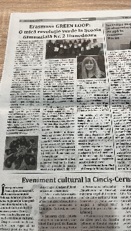
The project team's visit was also featured in the school magazine so that students, parents, teachers, and community members could learn more about the project's objectives, activities, and results.

3. Activities and Events Implemented in Romania
- Piloting of six lessons-(64 students and 6 teachers)-70 people
Six project lessons were piloted with the participation of the partner countries involved in this stage: Romania, Slovakia, and Estonia. In Romania, the piloting activities involved three classes and approximately 63 students. The lessons helped students understand waste prevention, circular economy principles, and practical environmental responsibility.
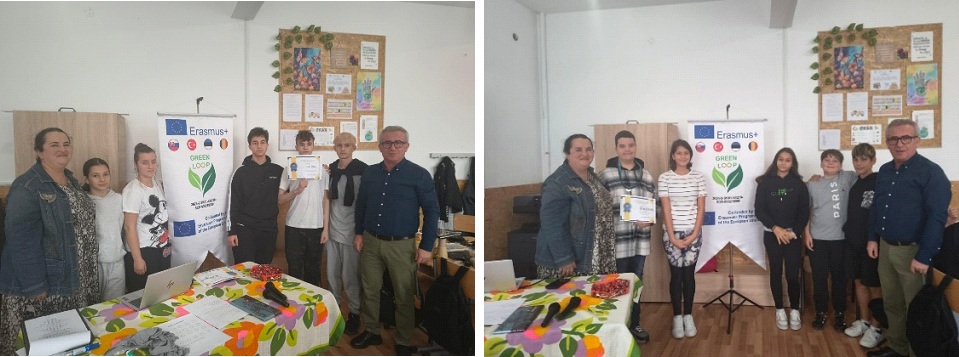
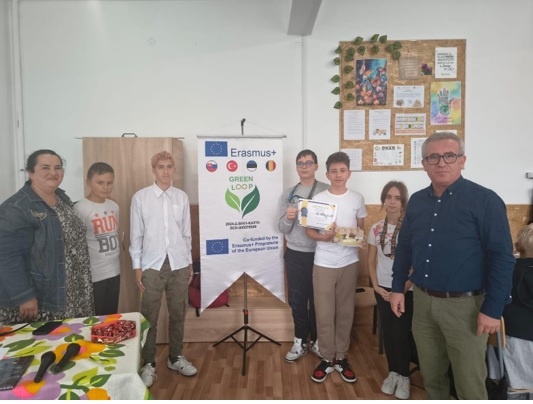
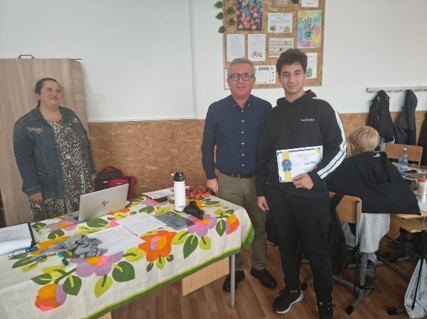
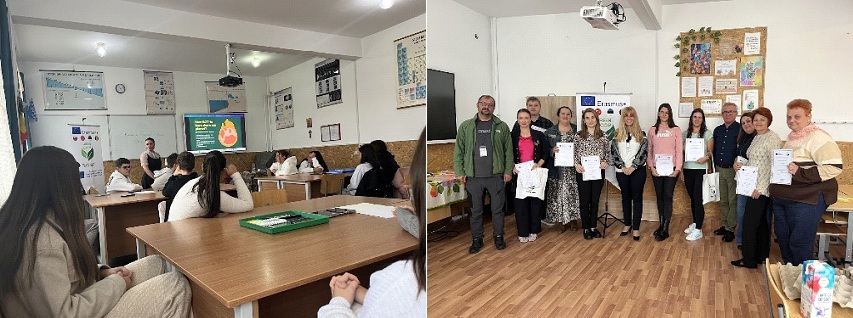
- Upcycling workshops during Green Week in Romania
Green Week offered teachers and students the opportunity to learn together through practical environmental activities. The activities focused on repair, recycling, upcycling, planting, and school improvement actions, helping students develop practical skills and environmental responsibility.
The school integrated “Trash to Treasure” activities in which students transformed plastic bottles, cardboard, textiles, and other discarded materials into functional classroom items or art installations.
-
April 2025- 3 classes, 50 students
- During the first workshop, students worked in groups to design and build creative prototypes using recycled materials. They made mini wind turbines to explore renewable energy, eco-friendly model houses to understand thermal insulation, and colorful rugs or blankets from old T-shirts to promote textile recycling. The activity encouraged teamwork, creativity, and environmental awareness through hands-on learning.

- Students, parents, and siblings helped transform old pallets into benches for the school. At the same time, students learned weaving techniques and explored how old textiles can be reused creatively. One student also created a tutorial to document the pallet upcycling activity.

- April 2026- 1 class, 20 students
In April 2026, one class of 20 students carried out the “Our Eco School” activity. Students audited the school environment, identified sources of waste, and proposed their own practical solutions for reducing waste and improving sustainability in the school.
- Recycling Challenges
Classes competed to correctly collect and recycle materials. Students received small cardboard boxes to collect batteries as part of the Școala Ecoterienilor initiative, which encourages the safe disposal of hard-to-recycle items.
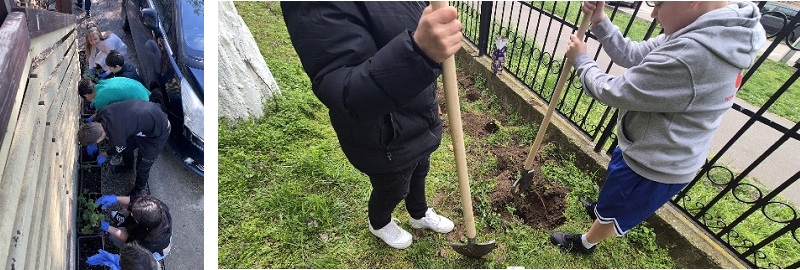
- Planting Activities
Planting trees helps improve local environments and strengthens environmental awareness.
PROJECT N° 2024-2-SK01-KA210-SCH-000278989
Funded by the European Union. Views and opinions expressed are however those of the author(s) only and do not necessarily reflect those of the European Union or the European Education and Culture Executive Agency (EACEA). Neither the European Union nor EACEA can be held responsible for them.